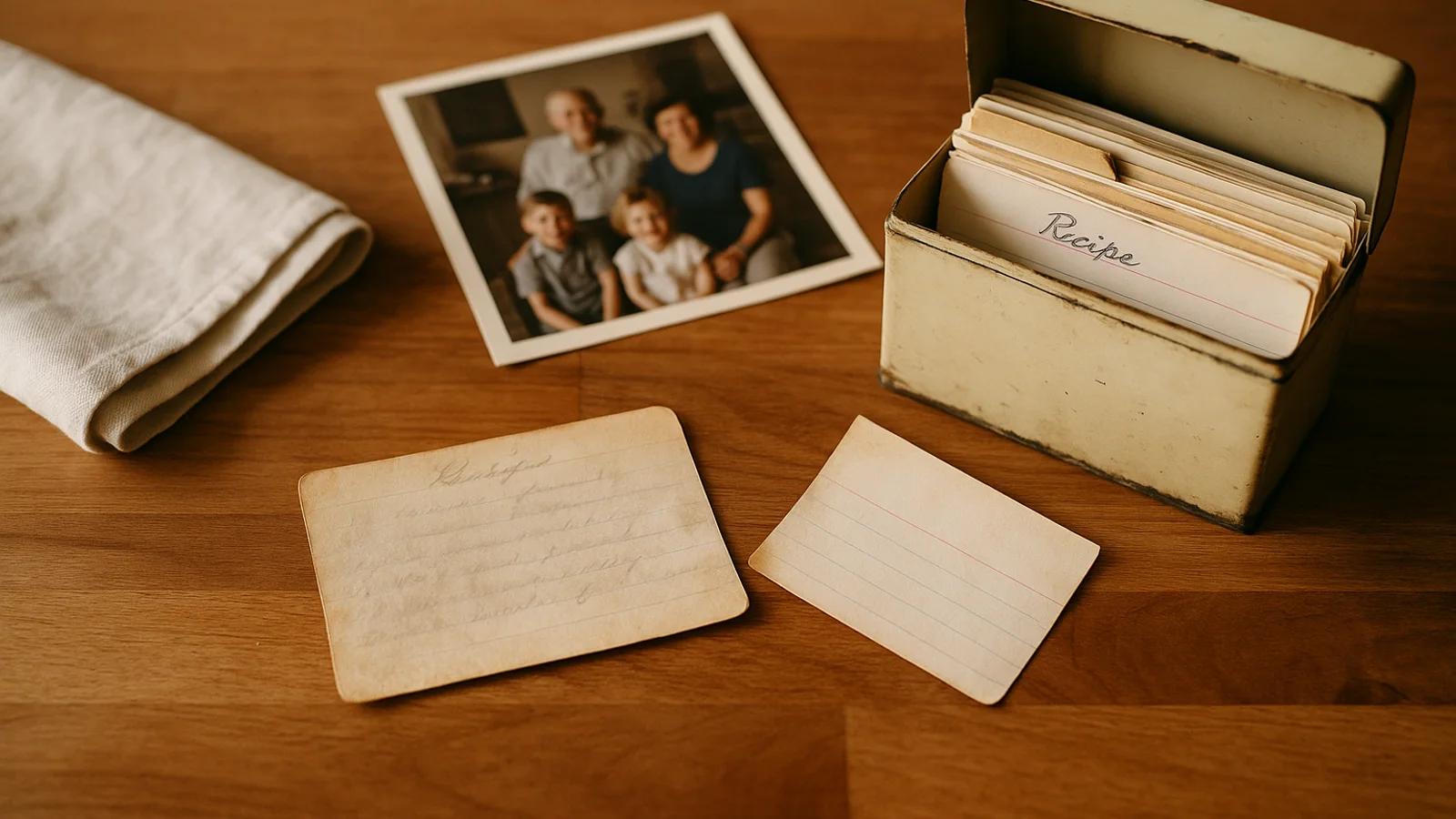
Why Family Recipes Disappear (And How to Stop It)
Family recipes rarely vanish all at once. They disappear through scattered storage, one-person knowledge, missing context, and systems families stop using.
Best starting point
Save the recipe and the memory while the people who know it can still fill in the gaps.
Recipes We Share is designed for more than ingredients: original photos, family comments, memory notes, source details, and variations stay attached to the recipe people will actually cook from.
In Recipes We Share
- Add the recipe and keep the original image.
- Record who made it, where it came from, and when the family serves it.
- Invite relatives to add comments before the small details disappear.
What this guide helps you decide
- Which stories and cooking cues are worth saving.
- Which recipes are most at risk.
- How to preserve meaning without turning the cookbook into clutter.
Most family recipes do not disappear because someone throws them away. They disappear because they were never stored in a way that made them easy to keep, understand, and share.
One recipe lives in a text thread. Another is tucked into a cookbook. Another exists only in a grandmother's memory, measured in pinches and handfuls. Everyone assumes the recipe is safe because someone still knows it, until that person is unavailable or the card goes missing.
Recipes We Share is built to stop that drift: preserve the original, create a clean recipe, save the story, and share access before the knowledge narrows to one person.
Recipes disappear in small, ordinary ways
Recipe loss usually looks mundane:
- a card gets tucked into the wrong cookbook
- a phone photo disappears during an upgrade
- a texted recipe gets buried in a thread
- a relative moves and a binder is boxed away
- a handwritten note fades until no one can read it
- a recipe is copied without the margin notes
No single moment feels catastrophic. The loss compounds slowly.
One-person knowledge is the biggest risk
The most fragile recipe system is the one that depends on one person. Experienced cooks carry details that never make it onto the card:
- how dough should feel
- how dark the crust should be
- which pan size actually works
- when the sauce is thick enough
- which ingredient brand matters
- why the family version differs from the printed one
If that knowledge never leaves one person's head, the recipe is already at risk.
Photos and screenshots are not enough
Taking pictures of recipe cards is a good start, but photos alone are hard to use. They are difficult to search, difficult to cook from on a busy night, and easy to separate from the family context.
A stronger archive connects:
- the original photo
- the clean recipe
- comments and memories
- tags and collections
- the people who can clarify details
That connection is what turns storage into preservation.
Stories disappear faster than ingredients
When a recipe is lost, the instructions are not the only thing that disappears. People also forget who made it, where it came from, which holiday it belonged to, and why the family changed it.
That context can feel optional until it is gone. A recipe called "Apple Pie" is useful. "Grandma's Apple Pie, with Aunt Linda's nutmeg note and Dad's darker-bake version" is family history.
How to stop recipe loss before it compounds
Start with the recipes most at risk:
- Photograph the original card or page.
- Create a clean recipe people can cook from.
- Attach the original image to the recipe.
- Add the source person and family context.
- Use collections and tags so relatives can find it.
- Ask relatives to comment with missing details.
- Share access beyond one household.
Do not wait for the full archive to be perfect. Preserve the fragile recipes first.
Preservation works best while the people are still here
The best time to ask about a recipe is when the person who knows it can still answer casually. Waiting turns easy questions into permanent gaps.
Ask now:
- Is this the version you still make?
- What did the card leave out?
- Who taught you this recipe?
- What changed over time?
- When did the family serve it?
Even short answers can transform a recipe from a vague artifact into a usable family record.
The goal is access
Family recipes do not usually disappear because nobody cared. They disappear because everyone assumed they would always be there.
The solution is not sentiment alone. It is a system your family will actually use: original images, clean recipes, searchable organization, memories, comments, and shared access.
Put the process into practice
Use Recipes We Share to save the recipe and the story around it
The platform is designed for the full workflow these articles describe: capture the original recipe, refine it into a clean version, save the notes and memory behind it, and share it with family in one place.
- Preserve the original image and the cleaned recipe together
- Attach memories, notes, and context while the details are still available
- Share the finished recipe with family instead of passing it around manually
On this page
Related posts
More articles in stories to keep the momentum going.
Google Photos, Notes, or a Family Recipe Archive?
Photo folders and notes apps are useful starting points, but a real recipe archive connects the original image, clean recipe, search, memories, and sharing.