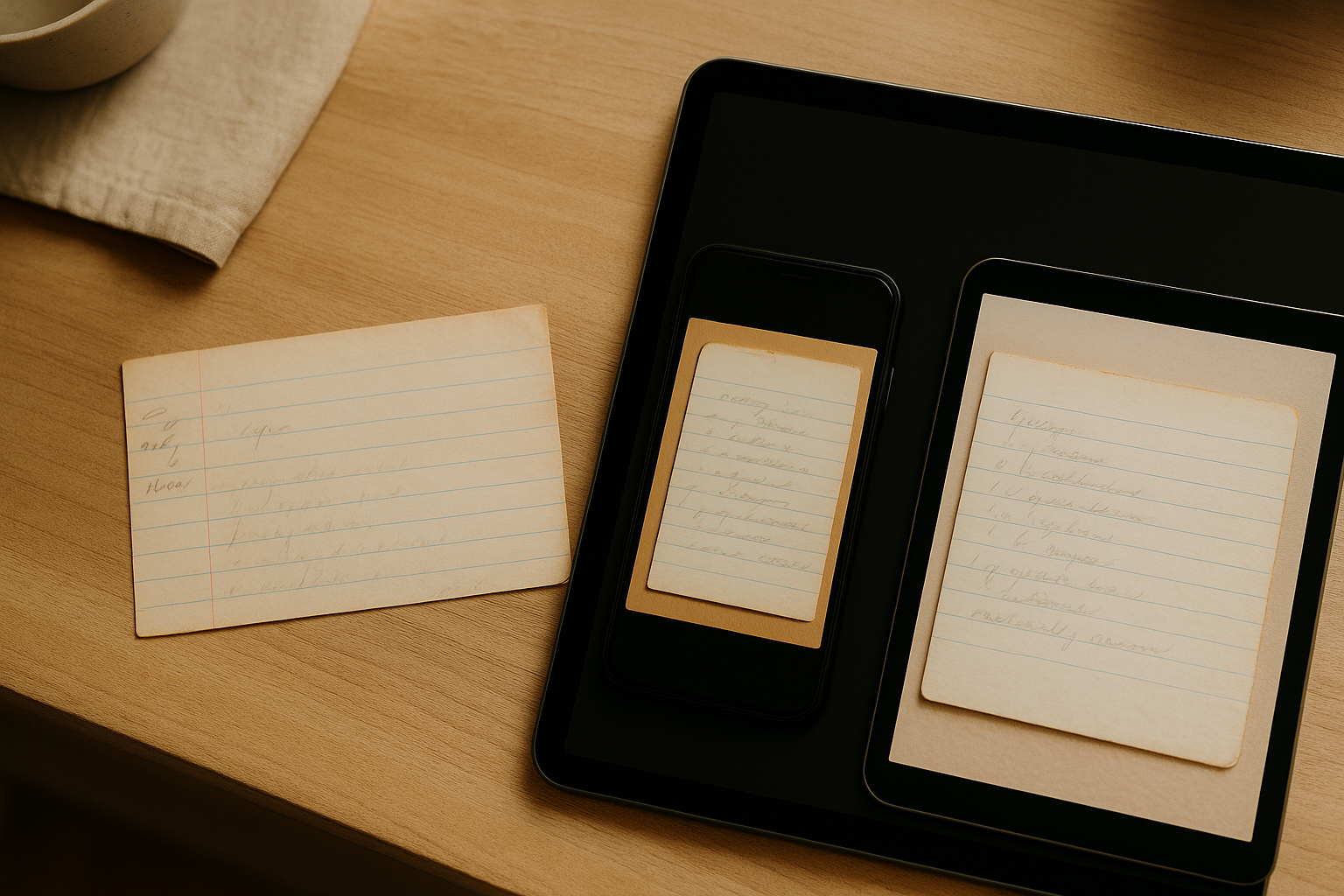
Recipe Card Cleanup Mistakes to Avoid Before You Digitize
Cleaning up a recipe card should improve readability without stripping away the handwritten details that make the original meaningful.
Cleaning up old recipe cards sounds simple until people accidentally remove the exact details they meant to preserve. The goal of cleanup is to make the card easier to read and store, not to sanitize it into something generic.
Before you scan or photograph family recipe cards, avoid the cleanup habits that erase useful context.
Do not crop too aggressively
The edges of a recipe card often tell part of the story. Tape marks, clipped corners, stains, and margin notes may not feel essential in the moment, but they help preserve the original artifact. Crop enough to remove distracting background, but keep the full card visible.
If there is handwriting along the top edge or a note squeezed into the margin, a tight crop can permanently remove it from the digital record.
Do not "fix" handwritten edits out of the image
Crossed-out ingredients, darker overwriting, added temperatures, and side notes are not flaws. They are evidence of how the recipe changed. People often clean these out because they want a polished image, but that polish comes at the cost of history.
It is fine to create a clean typed version for cooking. It is not fine to treat the original image like a draft that needs to be corrected. Preserve it honestly.
Avoid heavy filters and oversharpening
Phone apps make it easy to crank contrast until a faded card looks dramatic, but overprocessing can destroy subtle handwriting and paper texture. The best cleanup adjustments are modest:
- straighten the card
- increase brightness slightly
- improve contrast just enough for legibility
- reduce obvious background distractions
If the card still looks like an old card afterward, that is a good sign.
Do not separate related pieces of the recipe
Some family recipes come with more than one artifact: a front card, back card, extra note, envelope insert, or clipping from a community cookbook. Keep these together. If you scan them separately, name and store them as one recipe set so no one loses the context later.
The most common mistake here is saving the main card and forgetting the add-on note that contains the actual bake time or ingredient swap the family depends on.
Clean for readability, preserve for memory
A good digitizing process gives you both a readable copy and a truthful original. The card does not need to look new. It needs to be legible, complete, and connected to the structured recipe that your family will use.
That is the standard to aim for. Preservation should remove friction, not personality.
Make the scanning step easier
Use Recipes We Share to go from photo to usable recipe card
Instead of managing phone photos, manual notes, and cleanup steps in separate places, upload the recipe once and keep the original image, extracted text, and polished digital version together.
- Upload one recipe photo or a full batch from your phone
- Keep the handwritten original attached to the clean recipe
- Edit the extracted ingredients and steps in one place
Preserve your family's recipes before they're lost
Sign up for weekly tips on digitizing and sharing your family recipe collection.
On this page
Related posts
More articles in tips to keep the momentum going.
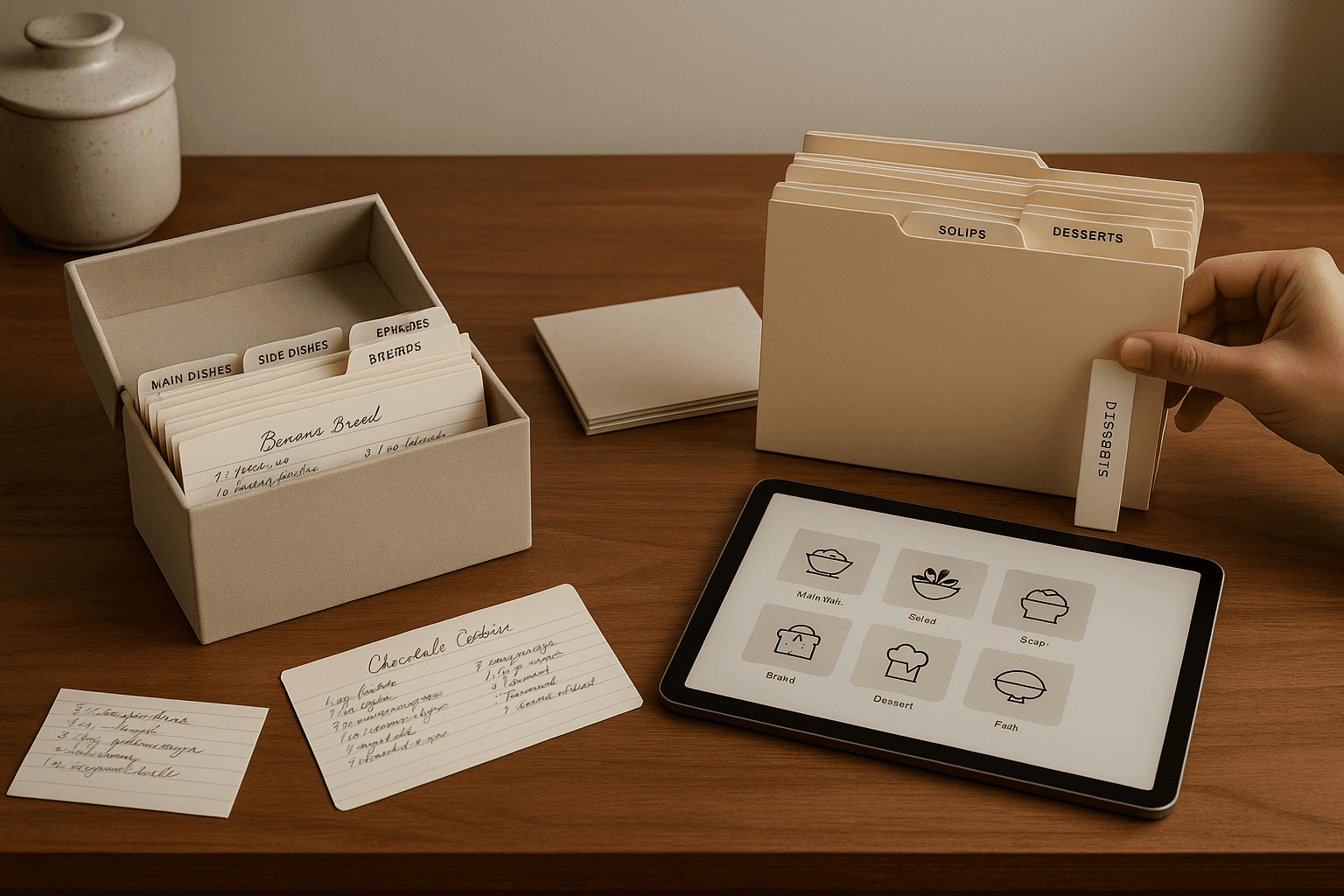
Naming and Tagging Recipes So Your Family Can Actually Find Them
Good recipe archives fail when naming is inconsistent. Here is a simple system for titles, tags, and collections that keeps family recipes searchable.
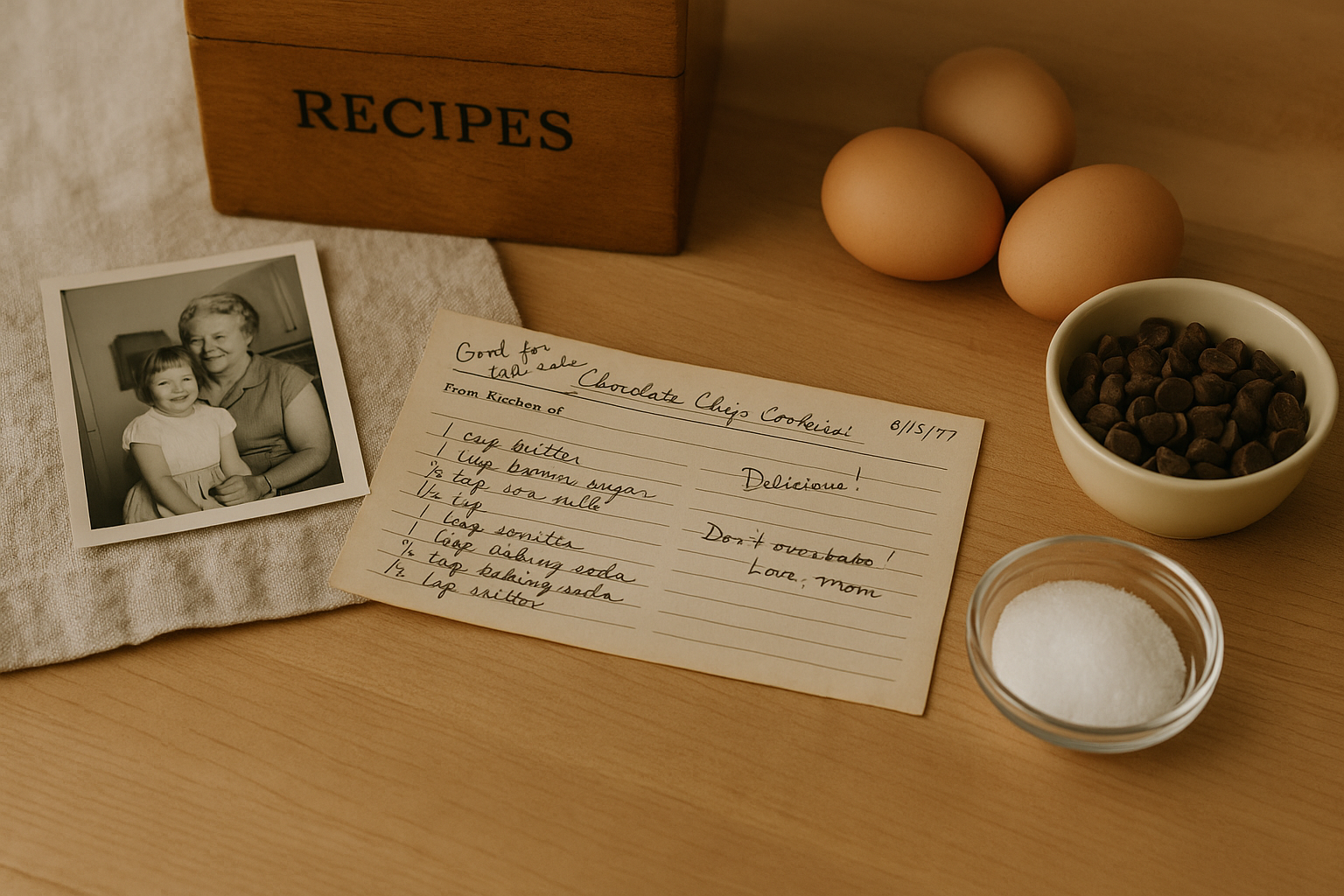
What to Save With a Family Recipe Besides the Ingredients
The ingredients matter, but they are not the whole recipe. These are the extra details that make a family recipe understandable and worth preserving.