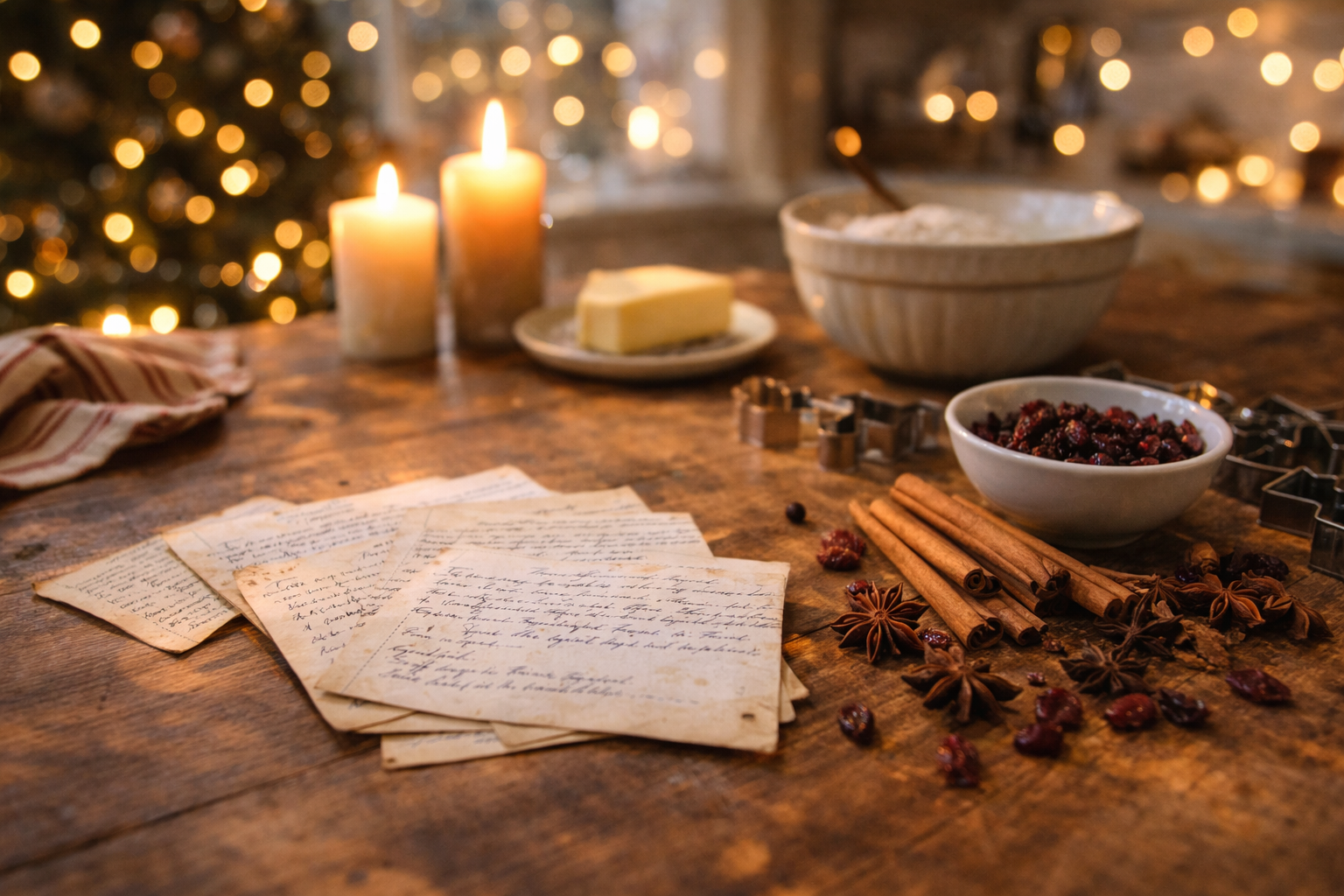
Which Holiday Recipes Should You Digitize First?
Start with the holiday recipes most at risk: the dishes tied to one person, handwritten edits, annual gatherings, and family memory.
Best starting point
Use the app to turn the photo into a usable recipe, then use this guide to protect the details.
Recipes We Share keeps the original card, AI-extracted ingredients, cleaned-up directions, notes, and family context together so the work does not split across camera rolls, notes apps, and spreadsheets.
In Recipes We Share
- Upload the card or cookbook page from your phone.
- Review the extracted ingredients, steps, timing, and yield.
- Save the original image beside the polished recipe card.
What this guide helps you decide
- How to photograph the card cleanly.
- Which details still need a human check.
- How to avoid losing handwriting, edits, and story.
Holiday recipes are usually the highest-value place to start because they combine food, memory, timing, and family expectations. They are also easy to neglect because nobody notices a missing detail until the holiday returns.
Recipes We Share helps you build a holiday collection, upload original cards, add the clean recipe, and invite relatives to fill in missing details before the next gathering. The work is small compared with the frustration of discovering too late that nobody knows the real version.
Do not start with every recipe. Start with the recipes that would hurt most to lose.
Start with dishes only one person really knows
The first recipes to digitize are usually not the ones everyone can already make. They are the ones everyone talks about but only one person can reliably reproduce.
Examples:
- stuffing that only one aunt seasons correctly
- Christmas cookies with an unwritten shaping method
- pie crust that depends on texture cues
- gravy that never had exact measurements
- a reunion casserole copied across several cards
If the recipe depends on one person's memory, it belongs at the top of the list.
Prioritize annual recipes with long gaps
Holiday recipes disappear quietly because they are made only once a year. If a detail is missing in January, people may not notice until November.
Digitize:
- Thanksgiving sides
- Christmas cookies
- Easter breads
- birthday cakes
- reunion dishes
- New Year's appetizers
- recipes tied to a specific family host
Annual recipes need preservation before the annual moment arrives.
Save cards with handwritten edits first
Cards with corrections, crossed-out temperatures, ingredient substitutions, or margin notes are especially valuable. They show how the family actually made the dish, not just how the original source printed it.
When you upload those cards, preserve both:
- the original image with edits visible
- the clean recipe people can cook from
Then add a note explaining which handwritten changes are current family practice.
Build a first-ten holiday list
If the archive feels overwhelming, make a first-ten list:
- the most-requested holiday dessert
- the main side dish only one person makes
- the recipe with the most handwritten edits
- the dish tied to the oldest living cook
- the recipe people argue about because versions differ
- the one that requires a special pan or tool
- the make-ahead dish with hidden timing
- the recipe from a family branch that is underrepresented
- the dish your kids or grandkids ask for
- the recipe most likely to be needed this year
Add those to a holiday collection before you worry about everything else.
Capture the role, not just the formula
Holiday dishes are not just instructions. Save the role they play:
- who always made it
- where it was served
- which holiday it belongs to
- what changed over time
- what people remember about it
- who should review the recipe
This is where memories and comments matter. A clean recipe card tells people how to make it. The attached story tells them why it belongs.
Use the next holiday as a review deadline
Once the recipes are digitized, use the next gathering to improve them.
Ask relatives to:
- confirm timing and pan size
- add a photo of the finished dish
- comment with variations
- mark which version was served
- add missing history while everyone is together
The holiday table is the best research opportunity your cookbook will get.
Start with what cannot be easily replaced
The right first recipe is not always the prettiest card or the easiest scan. It is the one with the most fragile knowledge around it.
Preserve that first. The rest of the archive can grow from there.
Make the scanning step easier
Use Recipes We Share to go from photo to usable recipe card
Instead of managing phone photos, manual notes, and cleanup steps in separate places, upload the recipe once and keep the original image, extracted text, and polished digital version together.
- Upload one recipe photo or a full batch from your phone
- Keep the handwritten original attached to the clean recipe
- Edit the extracted ingredients and steps in one place
On this page
Related posts
More articles in guides to keep the momentum going.
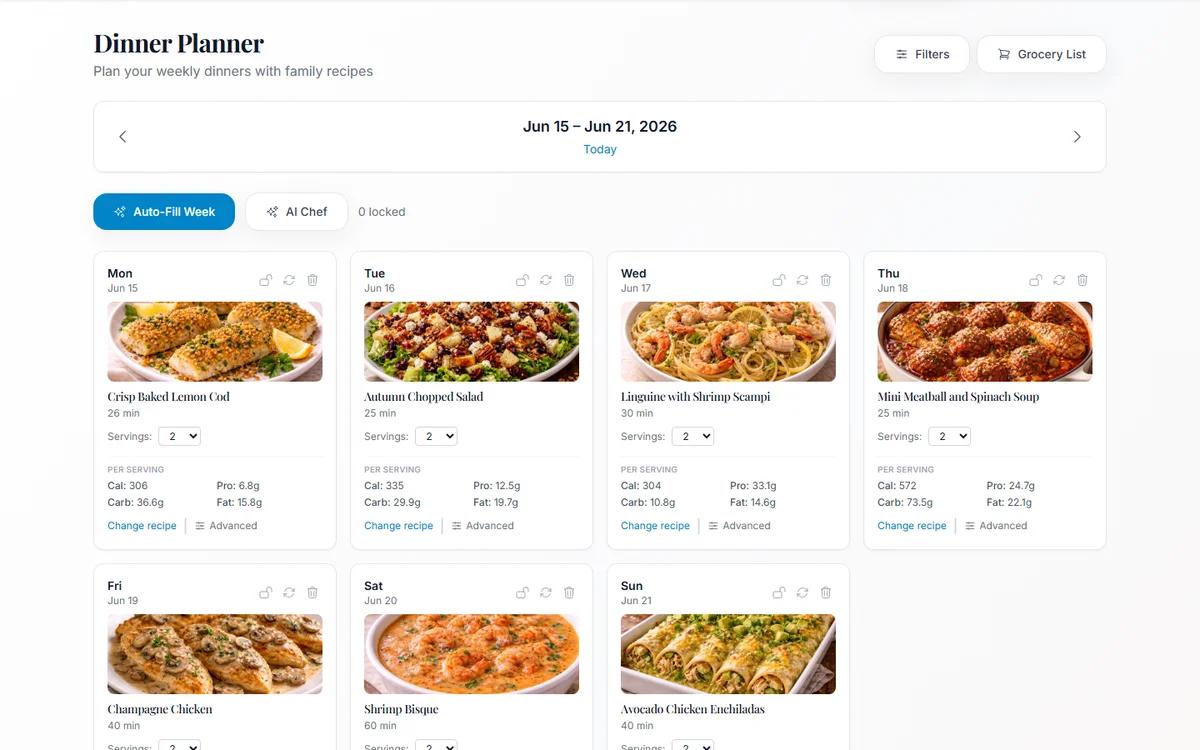
How to Use Family Recipes for Meal Planning, Nutrition, and Grocery Lists
Preserve recipes once, then use them for weekly dinner planning, nutrition context, serving adjustments, and grocery lists.
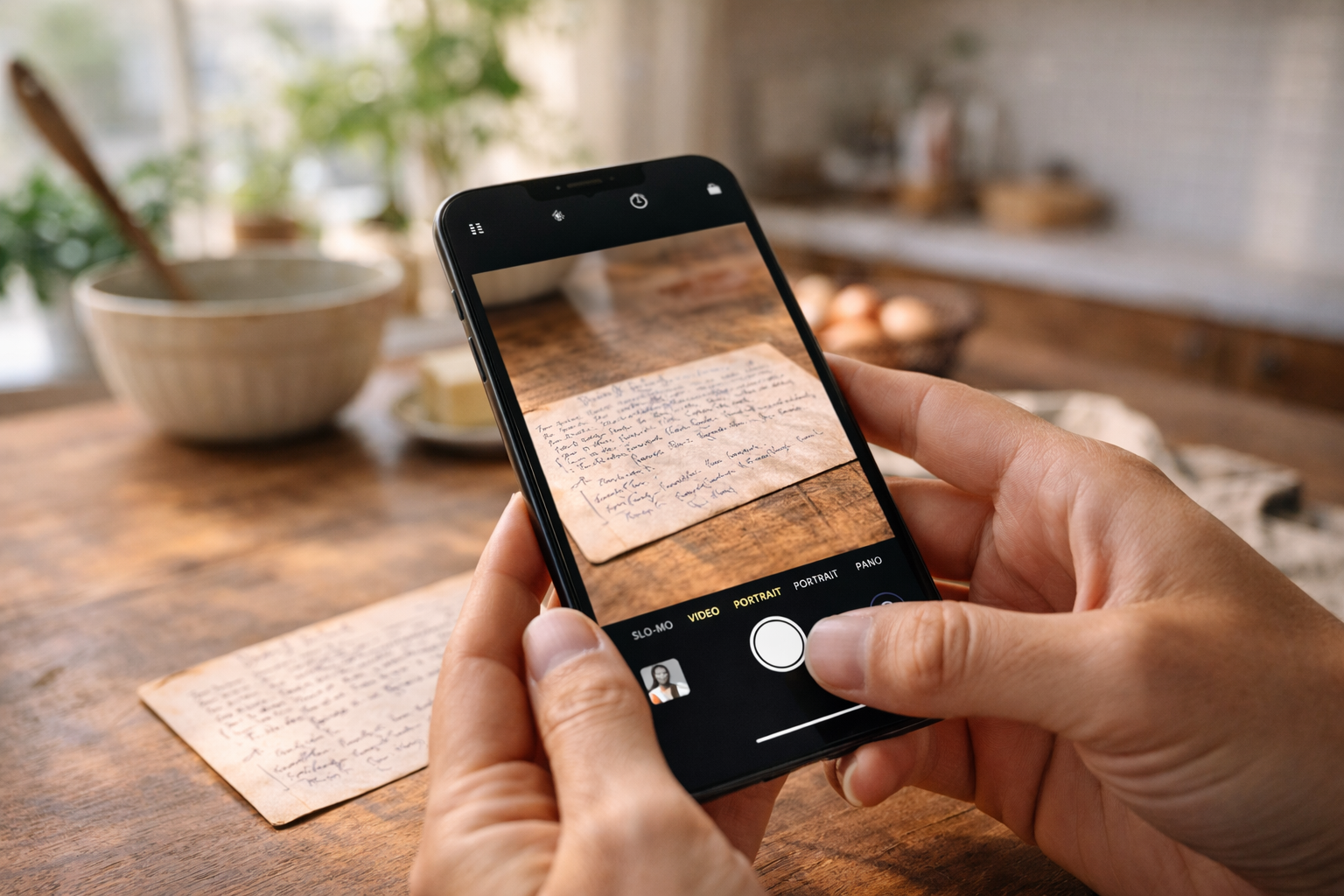
How to Scan Recipe Cards With Your Phone and Keep Them Organized
A practical phone-scanning workflow for capturing recipe cards cleanly, preserving handwritten details, and turning photos into usable recipes.
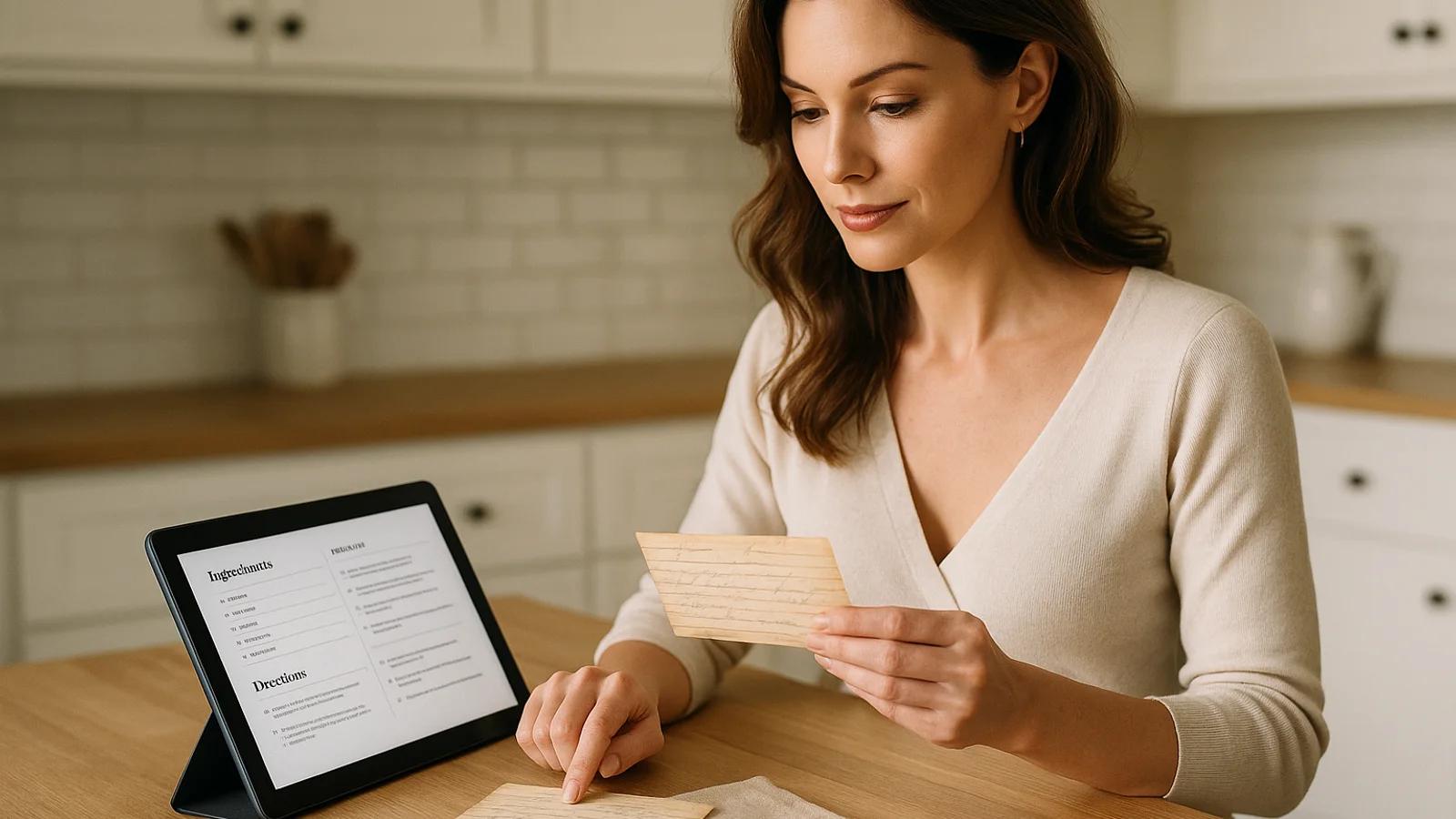
How to Digitize Handwritten Family Recipes Without Losing the Story
A complete workflow for turning handwritten recipe cards into searchable, shareable recipes while preserving the original card, notes, and family story.